 Young András Pető
There is a quiet truth that becomes more apparent the longer one observes human systems, cultures, and memory: what is not consciously preserved will, over time, be subtly erased—not always through intention, but through neglect, technical fragility, or the simple drift of attention elsewhere.
Traditions that serve humanity do not survive by accident. They survive because they are tended.
And what is worth asking—carefully, without sentimentality—is: which traditions actually serve life, coherence, and the continuity of human dignity, and which are merely repetition without living value?
The traditions worth keeping alive are not always the loudest or the most widely celebrated. They are often the quiet disciplines of quality, care, proportion, patience, relational intelligence, and embodied knowledge. They are the practices that emerged from lived necessity rather than abstraction. The ways of building, healing, teaching, growing, and relating that were refined over time not because they were fashionable, but because they worked.
These are the human “natural solutions”—not in a romanticised sense, but in a deeply practical one. They are solutions aligned with how bodies learn, how environments respond, how communities stabilise, and how meaning is transmitted without needing constant reinvention. When such traditions are intact, they act like a stabilising field: invisible, but structuring everything around them.
When they are weakened or fragmented, something else begins to happen. Systems become more complex but less coherent. Knowledge becomes more available but less embodied. And memory becomes increasingly dependent on fragile external containers.
It is in this context that the question of preservation becomes not nostalgic, but essential.
Because preservation is not only about keeping the past alive—it is about maintaining continuity in the intelligence of what has already been learned. 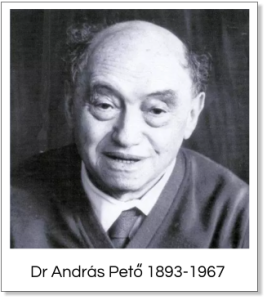
Recently, I experienced something that brought this into sharp focus. A large body of my own work—writings, blog posts, photographs, and a documented history spanning over forty years—was unexpectedly removed from one of my websites. Not archived, not relocated, but simply taken off. The process was opaque enough that even the hosting company could not initially determine what had happened or how it occurred.
What remained was not just a technical gap, but a felt discontinuity—a rupture in a personal archive that had carried years of observation, inquiry, and lived record. And like many such experiences in the digital age, it revealed something larger than itself: how vulnerable our collective memory has become when it is stored in systems we do not fully govern or understand.
The effort to recover fragments of that work became, in itself, instructive. It required patience, persistence, and a gradual acceptance that not everything could be restored in full. Some parts returned. Others did not. And in that partial recovery, another truth emerged: preservation is not a single act, but an ongoing relationship with what we value.
This is where the deeper reflection opens.
If knowledge, expression, and cultural memory are not actively safeguarded, they can disappear not only through destruction, but through system failure, redesign, or simple oversight. And when that happens, what is lost is not only content—it is continuity of thought, continuity of witnessing, continuity of care.
This is why traditions matter. Not as fixed forms, but as living agreements between generations about what must not be forgotten. They carry within them an implicit ethic: that certain standards of quality, attention, and meaning are worth more than convenience, speed, or disposability.
To keep traditions alive that serve humanity is to make a quiet but radical commitment: that not everything will be optimised into oblivion. That some things will be maintained because they anchor us. That coherence is more valuable than novelty alone.
And perhaps most importantly, it is to recognise that we are always, whether we realise it or not, participating in the maintenance of a cultural memory field. Every act of documentation, every craft preserved, every teaching passed on, every archive protected—these are not isolated gestures. They are contributions to a shared continuity that extends beyond any single lifetime.
The question is not whether change will happen. It always will.
The question is whether, within that change, we will actively preserve what allows humanity to remain oriented—toward quality, toward coherence, toward life-serving intelligence.
Because without that, we do not simply lose the past.
We lose the map of how to recognise what is worth continuing.