

This is perhaps one of the most important questions we can ask when working with a child with cerebral palsy.
Not only:
What is the body learning?
but also:
Who is the child becoming through the repetition of daily experiences?
Every repeated action and experience leaves an imprint.
Repetition shapes movement patterns, neural pathways, muscles and joints. But equally, it shapes trust, identity, confidence, anticipation, and the child’s sense of possibility. This is not referring to exercises, but to the repetition of everyday lived experiences, positioning, interaction, and daily moments.
The body remembers. The nervous system remembers. The muscles remember. The breath remembers. The posture remembers. The emotions remember. The sense of safety remembers. The sense of self remembers.
What is repeatedly endured or experienced | What kind of being the child may gradually become |
Gentle encouragement, time to initiate movement, and patient waiting | A child who begins to feel seen as capable, learning that their effort has meaning and that their body is worthy of trust |
Frequent handling without explanation or invitation | A child who may become passive in their own body, waiting for movement to be done to them rather than discovered through them |
Repeated physical discomfort, tightness, poorly fitted seating, splints, or restrictive positioning | A child who may become guarded, vigilant, and protective, anticipating discomfort before the moment even arrives |
Opportunities for movement that arise through curiosity, imaginative and self-led discovery | A child who becomes curious, expressive, and embodied in possibility, where movement is linked with joy rather than a task |
Constant correction of posture and movement without emotional attunement, and without recognition of the child’s own emerging need and capacity for self-adjustment | A child who may become self-conscious or hesitant |
Repeated experiences of success, however small | A child who grows into inner resilience, learning that progress can emerge through many small moments |
Adults speaking with the child, not only about the child | A child who becomes present in their own narrative, developing voice, agency, and selfhood |
Adults speaking around the child in clinical language | A child who may begin to feel objectified or absent from decisions about their own body |
Inclusion in peer play and shared social experiences | A child who develops belonging, confidence, and relational safety |
Repeated exclusion, overprotection, or lowered expectations | A child who may gradually internalise limitation as identity, with reduced initiation, a tendency to wait for things to be done for them, and patterns of learned helplessness |
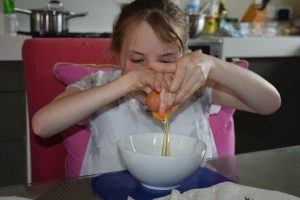
What a child repeatedly endures does not simply train function. It quietly teaches the child what to expect from the world.
Will the world wait for me? Will it listen to my pace? Is my body a place of safety? Am I someone who can act, choose, and influence what happens next?
These questions are rarely spoken of. Yet they are often lived every day.
With cerebral palsy, repetition is clinically important. But repetition is also existential.
A thousand daily moments become an identity.
The child does not only learn movement patterns.
The child learns: who they are in relation to their body, to others, and to possibility itself.
The deepest intention, as expressed in daily life, is not only helping the child move better, function more easily, participate more fully, experience comfort in their body, access choice, and be met with understanding.
It is helping the child become a being who feels:
I belong in my body.
I am heard.
I can begin.
I can influence my world.
I am safe.
I am included.
I can express myself.
That is where what is offered in Quantum Neuro Transformation® becomes deeply human and relational.