
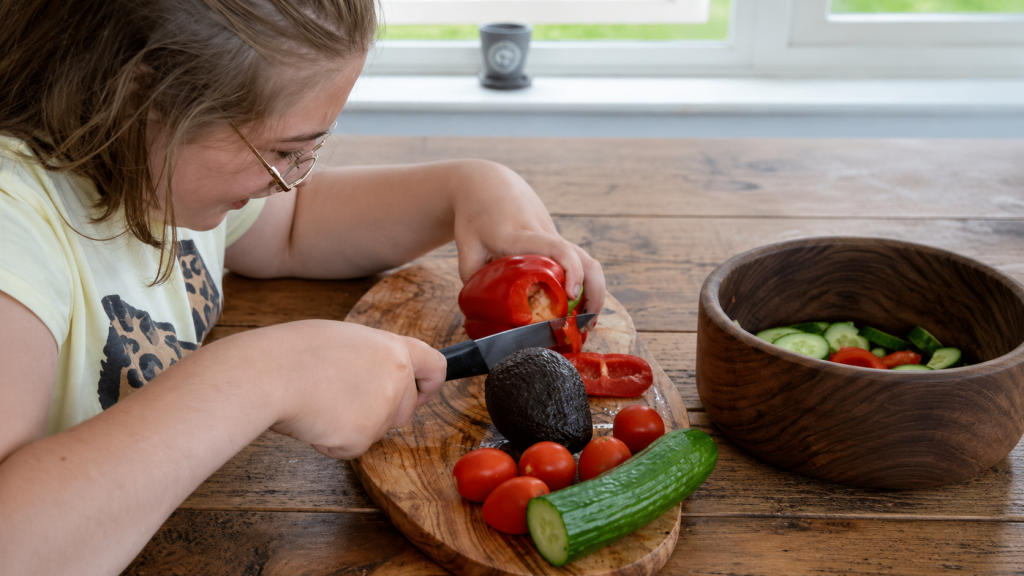
Objects influence daily life most deeply when they reduce unnecessary friction within ordinary routines. Thoughtful design, sensory comfort, accessibility, and ease of use may quietly support greater steadiness, participation, and emotional regulation throughout the day.
Adaptive objects are often understood only through clinical or functional language. Yet many thoughtfully designed everyday objects influence far more than practical ease alone. They influence atmosphere, dignity, rhythm, comfort, participation, and the emotional experience of daily life, while also gently encouraging greater engagement, functional development, autonomy, and integration within ordinary activities and environments.
The most thoughtful objects are rarely those that replace participation entirely, but those that reduce unnecessary barriers while still allowing space for active involvement, exploration, movement, learning, and developmental experience within everyday life.
The environments people move through each day are experienced physically, emotionally, and sensorily. Small changes in how objects function within those environments may therefore influence daily life more significantly than expected.
Everyday ease and nervous-system load
When environments require little physical adjustment or effort, active, intentional participation, clearer sensory orientation, and more coherent engagement in everyday activities, they influence movement, regulation, exploration, participation, and developmental integration across multiple interconnected levels of experience.
Children living with neurologically based conditions often have far greater capacity for engagement, learning, adaptation, participation, and development than is commonly recognised. Yet much of this capacity may remain inaccessible when children become passive participants within their own everyday lives, or when objects and equipment begin to replace rather than encourage active engagement, exploration, movement, intentional participation, and learning through lived experience.
These underlying processes may remain largely invisible externally for a time, yet they can significantly influence how fully a child will be able to engage, organise, regulate, learn, participate, communicate, relate, and develop physically, cognitively, emotionally, sensorily, physiologically, and socially within ordinary everyday life.
When greater environmental coherence is present, changes may gradually emerge across multiple interconnected areas, including:
-
- posture and physical organisation
-
- movement quality and coordination
-
- physiological regulation and energy organisation
-
- breath and autonomic rhythm
-
- visual development and visual-spatial orientation
-
- attention and cognitive endurance
-
- sensory processing and integration
-
- emotional regulation
-
- frustration tolerance and resilience
-
- confidence and willingness to participate
-
- communication and relational engagement
-
- curiosity, exploration, and problem solving
-
- continuity of effort and motivation
-
- autonomy within ordinary routines
-
- body awareness and proprioceptive integration
-
- timing, rhythm, and motor planning
-
- environmental orientation and spatial coherence
-
- capacity for sustained engagement within everyday activities
These shifts are often subtle externally at first, yet over time they may significantly influence participation, functional development, learning, emotional steadiness, and the child’s relationship with their own body, environment, and sense of possibility within everyday life.
Objects that support participation
Everyday environments that encourage participation
Thoughtfully adapted everyday environments may encourage greater participation, engagement, exploration, and learning within ordinary life without separating the child from natural developmental experience.
Within this approach, the intention is not to surround children with highly specialised equipment or create passive forms of participation, but to make small, thoughtful environmental adjustments that allow the child’s own intention, movement, curiosity, and active involvement to organise more coherently through everyday activities.
This may include:
-
- stable and accessible seating within ordinary family environments
-
- thoughtfully arranged spaces that encourage movement and exploration
-
- objects positioned to invite active participation and reach
-
- calmer sensory environments with reduced unnecessary distraction
-
- lighting that supports visual orientation and regulation
-
- tactile and sensory experiences that encourage engagement
-
- everyday household objects used intentionally within learning and participation
-
- simpler, more coherent environments that support attention and organisation
-
- rhythms and routines that encourage continuity of participation
-
- adaptable home environments that evolve alongside the child’s development
The most thoughtful environments often integrate quietly into ordinary daily life rather than continually emphasising difficulty, limitation, or difference. The goal is not to replace developmental effort, but to reduce unnecessary interference so that the child’s own capacity for movement, participation, learning, regulation, adaptation, and integration may emerge more fully through lived experience itself.
Dignity and emotional atmosphere
Objects influence emotional experience through more than utility alone.
Design, texture, colour, sound, visual tone, and material qualities — particularly the presence of more natural, tactile, and breathable materials such as cotton, linen, wood, wool, and other sensory-coherent fibres — all influence whether environments feel clinical, overstimulating, calming, grounding, emotionally respectful, or quietly limiting to participation and autonomy.
Thoughtfully arranged everyday environments matter not only because they influence practical participation, but because they help shape how children organise themselves physically, emotionally, sensorily, cognitively, and relationally through lived experience within ordinary life.
Thoughtful design may support:
-
- comfort
-
- dignity
-
- autonomy
-
- emotional ease
-
- sensory regulation
-
- participation within family life
These qualities often carry deep psychological significance over time.
Reducing friction within routines
Many daily difficulties may emerge through small but continually repeated points of environmental friction, including:
-
- awkward or unstable positioning
-
- inaccessible or poorly organised environments
-
- excessive compensatory effort during ordinary activities
-
- uncomfortable or sensory-disruptive material experiences
-
- visually chaotic or overstimulating environments
-
- sensory irritation and unnecessary environmental distraction
-
- environments that reduce opportunities for intentional movement, engagement, and exploration
Sometimes the most meaningful changes are very simple:
calmer lighting that supports visual orientation and regulation easier access to everyday objects and shared family spaces simpler and more coherent environmental organisation natural, tactile, and sensory-considerate materials thoughtfully arranged spaces that encourage active participation and exploration stable rhythms and continuity around everyday objects, movement, and routines
-
- more stable and accessible positioning within ordinary environments
-
- calmer lighting that supports visual orientation and regulation
-
- easier access to everyday objects and shared family spaces
-
- simpler and more coherent environmental organisation
-
- natural, tactile, and sensory-considerate materials
-
- thoughtfully arranged spaces that encourage active participation and exploration
-
- stable routines, rhythms and continuity around everyday objects and movement
These adjustments may quietly alter the emotional tone of everyday life.
Environment as part of learning and integration
Environments influence far more than comfort or practical accessibility alone. The organisation of space, sensory atmosphere, rhythms of daily life, material experiences, opportunities for movement, and the way ordinary objects are encountered all shape how children engage, participate, organise themselves, and learn through lived experience.
Within this approach, the intention is not to create passive environments centred around continual assistance or over-adaptation, but to support greater coherence between the child, the environment, and the developmental experiences unfolding within everyday life.
Thoughtfully arranged environments may help reduce unnecessary interference while still encouraging active participation, intentional movement, exploration, curiosity, problem solving, autonomy, and functional integration through ordinary daily activities.
When environments become calmer, clearer, more accessible, and more coherently organised, children often have greater opportunity to direct their own attention, intention, effort, and engagement toward learning, participation, and developmental growth within real life itself.
Ease as a form of coherence
Ease is often misunderstood as the absence of challenge, when in reality, meaningful development frequently emerges through challenges that are thoughtfully broken down into more achievable experiences within coherently designed environments. In this way, children may have greater capacity available for participation, attention, movement, learning, regulation, and developmental integration within everyday life.
The intention is not to overprotect children or reduce meaningful engagement with the world, but to create environments that allow greater coherence between the child, their attention, movement, intention, and the experiences through which learning and development naturally unfold.
Small environmental adjustments and thoughtfully arranged everyday objects may help reduce unnecessary interference while still encouraging active participation, exploration, autonomy, curiosity, movement, and lived engagement within ordinary activities and routines.
Over time, ordinary environments quietly become part of how children experience themselves, organise their attention and bodies, relate to others, and engage with the world around them. In this sense, thoughtfully arranged environments are not separate from development itself, but part of the wider atmosphere through which participation, learning, and integration gradually emerge.