
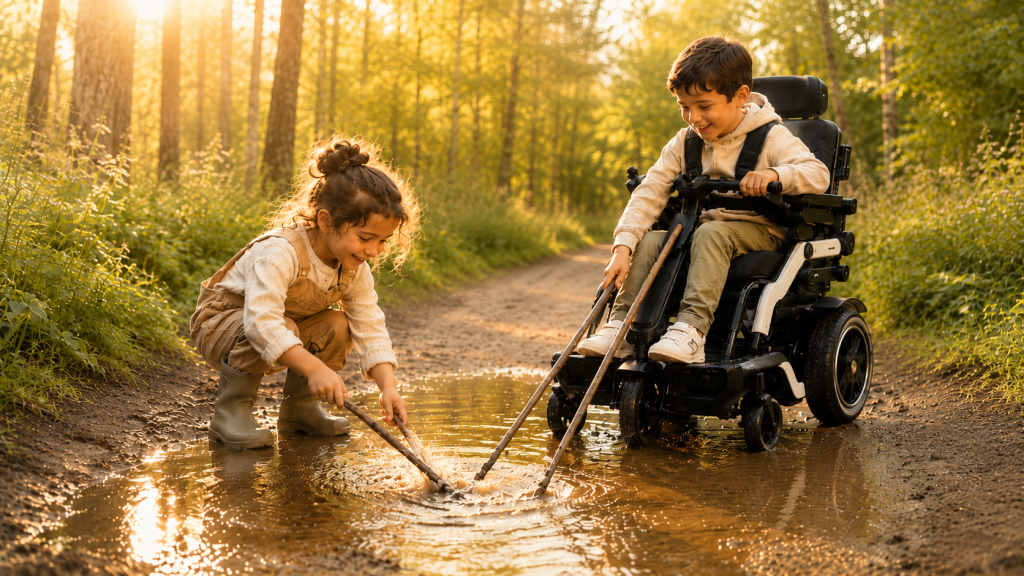
Unfolding
Childhood is not something to be controlled into shape.
It is a living developmental process influenced continuously by environment, relationship, nervous system regulation, sensory experience, emotional safety, nourishment, rhythm, rest, and the conditions surrounding daily life.
Every child unfolds differently.
Some unfold quietly.
Some intensely.
Some through movement.
Some through sensitivity.
Some through neurological complexity, developmental difference, emotional depth, or ways of perceiving and experiencing the world that modern systems do not always understand well.
Unfolding is not based on the idea that children must become more performative, more compliant, or more adapted to environments that work against their nervous systems and developmental needs.
It begins from a different understanding. That development is deeply relational.
That children are shaped not only by instruction, but by atmosphere.
By pace.
By sensory conditions.
By emotional tone.
By stress.
By regulation.
By connection.
By the rhythm and coherence of the environments in which they live.
Within Quantum Neuro Transformation®, development is understood as something that cannot be separated from the state of the nervous system or the conditions surrounding the body and mind daily.
Children do not unfold in isolation from:
- the homes they live in
- the stress held within environments
- sensory overload
- emotional tension
- nourishment
- sleep
- movement
- relational safety
- modern overstimulation
- or the quality of presence surrounding them
This space explores how early environments shape attention, regulation, and emotional development over time through a more humane, integrated, and developmentally aware lens.
Not through fear.
Not through perfection.
Not through performance-based parenting.
But through deeper attention to what allows human development to organise more naturally.
Including:
- nervous system regulation
- sensory environments
- developmental wellbeing
- emotional attunement
- neurological diversity
- rhythm and rest
- embodied learning
- connection to nature
- meaningful play
- nourishment
- humane environments
- and the deeper conditions that support life to unfold coherently
This space recognises that children are not problems to be fixed, but human beings developing within relationships, environments, nervous systems, and lived experience. Developmental and neurological differences are therefore not always best understood solely through models of deficit, correction, or symptom management, but through deeper attention to the conditions that shape regulation, participation, development, emotional life, and embodied experience.
Children living with conditions such as cerebral palsy, developmental differences, sensory processing challenges, neurological injury, chronic stress states, or other forms of complexity are not separate from humanity’s deeper understanding of development.
This is not a clinical or instructional space, but an observation of how environment and experience interact in formative years.
They often reveal it more clearly.
Their needs frequently illuminate truths modern culture overlooks:
- the importance of regulation
- the reality of sensory load
- the impact of environment
- the role of nervous system safety
- the necessity of rhythm
- the importance of connection over performance
- and the lasting effect of how daily life is structured around the body and mind
Unfolding is therefore not about creating idealised childhoods.
It is about creating conditions in which children — in all their uniqueness, sensitivity, complexity, and humanity — are more able to remain connected to themselves as they grow.
Not forced into constant contradiction with their own nervous systems.
But supported in ways that allow development, identity, emotional life, movement, learning, and relationship to emerge more naturally over time.
Because childhood is not a product to optimise.
It is a living unfolding of human life.
This is a developing body of work, shaped through reflection on childhood, environment, and lived experience.
Themes explored within Unfolding
- sensory environments
- rhythm and nervous system regulation
- developmental atmosphere
- language, attention, and emotional tone
- illustrated literature and emotional memory
- adaptive home environments
- meaningful participation and embodied development
- slower approaches to childhood
- neurological and developmental complexity
- environmental coherence
- childhood, dignity, and relational safety
Development and dignity
Childhood development is not shaped only through formal education or intervention, but through the repeated atmosphere of everyday life.
Sound, pace, transitions, emotional tone, sensory experience, nourishment, rest, spatial organisation, and the quality of presence surrounding a child all contribute to how safety, regulation, participation, attention, and emotional steadiness are experienced over time.
Some children are especially affected by these conditions.
Children living with developmental differences, neurological complexity, sensory sensitivities, cerebral palsy, chronic stress states, or other forms of physiological vulnerability often experience environmental incoherence with far greater intensity.
Their needs frequently illuminate truths modern culture overlooks:
the importance of rhythm,
regulation,
sensory consideration,
relational safety,
rest,
meaningful participation,
and the lasting effect of how daily life is structured around the body and mind.
Unfolding explores these quieter layers of development not through optimisation or pressure, but through observation, rhythm, environmental awareness, nervous system understanding, and deeper attention to the conditions that allow human development to organise more naturally.
A slower approach to childhood
Modern childhood often unfolds within continual stimulation:
rapid transitions,
fragmented attention,
background media,
visual saturation,
accelerated pacing,
and constant performance demands.
Slowness is therefore not simply aesthetic preference.
For many children, it becomes an important condition for regulation, emotional steadiness, participation, integration, imagination, and recovery.
A slower approach to childhood does not mean removing joy, movement, creativity, or intensity.
It means allowing greater space for:
attention,
rest,
emotional processing,
meaningful participation,
imagination,
sensory recovery,
and developmental rhythm within everyday life.
Featured reflections
The nervous-system experience of modern childhood
An exploration of sensory overload, fragmented attention, overstimulation, participation, rhythm, environmental coherence, and how modern environments influence childhood development across emotional, cognitive, sensory, physiological, and relational levels.
The developmental importance of active participation in childhood
Reflections on movement, exploration, meaningful engagement, environmental interaction, and how embodied participation supports childhood development across physical, emotional, cognitive, sensory, and neurological dimensions.
Why modern environments exhaust children
An exploration of accelerated pacing, passive stimulation, sensory overload, fragmented attention, and how modern environments influence nervous-system regulation, emotional steadiness, participation, and developmental experience.
Creating calmer sensory environments for children
Reflections on sound, lighting, visual noise, media saturation, transitions, rhythm, and environmental atmosphere — and how these shape nervous-system regulation and emotional life in childhood.
Why rhythm matters more than optimisation in childhood
An exploration of predictability, pacing, repetition, transitions, and the emotional stability created through coherent developmental rhythms.
Illustrated classics and emotional development
On storytelling, imagination, emotional memory, atmosphere, visual language, and the enduring influence of illustrated literature within childhood experience.
Adaptive home environments for developmental differences
Reflections on creating emotionally readable, sensory-considerate, and developmentally supportive environments that preserve dignity, participation, regulation, and everyday quality of life.
Continue exploring
Closing reflection
Childhood unfolds within atmosphere long before it becomes memory.
The rhythms of a home, the sensory environment surrounding daily life, the emotional tone of relationships, the pace of transitions, the quality of rest, nourishment, sound, language, and the deeper feeling carried within an environment all quietly shape the inner experience of growing up.
Unfolding is an ongoing exploration of those conditions — and the lasting influence they may carry across development, identity, emotional life, nervous system regulation, and the experience of being human.