
Autumn always reminds me of the smell of sharpened pencils, tidy pencil holders, the fresh pages of new exercise books, and the unmistakable smell of a new school book being opened for the first time.
Even now, in the middle of August, those memories seem to belong to September.
It is still summer, and we are enjoying August’s heat.
This summer has felt longer somehow — with so little rain and so many hot days, it has reminded me of summers in Europe. And yet those days just when the heat seemed to settle in for good, the sky would suddenly change. Dark clouds would gather, thunder and lightning would arrive, and then the rain would come — warm at first, falling in great rushing sheets, with the sound of thunder rolling across the sky. In what seemed like moments, the heat would be washed away, leaving the air fresh and the earth renewed.
There is still time for slow mornings, summer days and simply being together.
But September is quietly approaching.
And with it comes the return of rhythm, routine and expectation.
For a child with a neurologically based condition, this matters deeply.
When so much of a child’s day can be organised by other people — when movement, communication, transitions and even simple everyday activities may require assistance — predictability is not a small thing.
It can give a child something they may experience too little of:
security
certainty
orientation
and a sense that they can have an influence on what happens next.
Routine does not have to mean rigidity.
Quite the opposite.
Patterns create structure. Structure creates familiarity. Familiarity creates confidence. And confidence leaves more room for spontaneity — the freedom to meet life with greater ease.
And perhaps this is the perfect time to look again at the ordinary things we sometimes overlook.
The little steps of participating in life.
Getting dressed
Brushing teeth
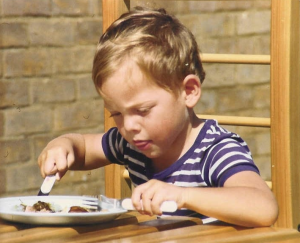
Eating neatly
Putting things away
Getting ready to leave the house
Going to the toilet
Going to bed
These are not insignificant tasks.
They are the fabric of everyday human life.
The overlooked importance of toilet training
Toilet training is often treated as a practical problem to be solved — or, with children who have neurologically based conditions, something that is simply expected to happen later, or perhaps never.
It often becomes bigger than it needs to be, surrounded by anxiety, frustration and assumptions about what a child will or will not be able to achieve.
But at the heart of toileting is something very simple.
Human dignity.
The possibility of becoming aware of your own body.
Recognising its signals.
Learning to respond to them.
Communicating a need.
Having a familiar place and rhythm for responding to that need.
Being able to participate in one of the most private and ordinary aspects of life.
And something else is often overlooked.
When a child begins to recognise their biological needs and develops greater control over them, their relationship with themselves can change.
They are no longer simply being cared for. They begin to move beyond seeing themselves as babies, and their cognitive field can begin to open as well.
They are beginning to know something about themselves, act upon it and communicate it to the outside world.
A new awareness begins to emerge.
And with it, new possibilities for participation, confidence and engagement.
The child’s world can begin to open.
I have often observed that when children become toilet trained, many of them also begin to do better at school. Their grades improve, their schoolwork improves, and their engagement with learning seems to change.
I am not presenting this as a simple cause-and-effect formula.
Every child is different, and many things are changing as a child develops.
But the pattern is striking, and it has appeared often enough to make me wonder what may be happening beneath the surface.
What happens when a child begins to experience their own body differently?
When they recognise an internal signal.
When they understand what it means.
When they communicate it.
When they take action.
When they discover that something happening inside them can be noticed, understood and acted upon.
Perhaps something shifts in the child’s relationship with themselves.
Perhaps the experience of “I know, I can, I can communicate, I can act” begins to extend beyond toileting into other areas of life.
And perhaps this is one reason why something that can appear so ordinary can have consequences far beyond the bathroom.
That is why I would encourage parents not to dismiss toilet training as a minor practical issue.
Look at it as another opportunity for the child to discover themselves as an active participant in life.
The question is not simply:
“Will my child become fully independent?”
It is:
“How much participation, awareness and responsibility can my child develop within this everyday experience?”
Perhaps they can recognise the need.
Perhaps they can communicate it.
Perhaps they can help with clothing.
Perhaps they can participate in the transfer.
Perhaps they can flush, wash their hands or return to the routine independently.
Every part matters.
And every part says:
You have a place in your own life.
Expect more — without demanding more
This is the balance we must hold.
A neurological condition may make something difficult.
It should not automatically make it unnecessary.
Sometimes, because we love a child deeply, we make life easier for them by doing everything.
But if we always remove the opportunity to try, we also remove the opportunity to discover.
So as September approaches, perhaps ask yourself:
Where could I step back just enough to let my child step forward?
Not everywhere.
Not all at once.
Just somewhere.
Give them time.
Give them a predictable sequence.
Give them a genuine choice.
Give them the opportunity to begin.
And wait.
Sometimes that pause reveals far more than another instruction ever could.
The real preparation for September
The most valuable preparation may not be a new timetable or a new set of exercises.
It may be returning to the simple rhythm of being human.
Wake
Wash
Dress
Eat
Move
Toilet
Participate
Rest
Sleep
These ordinary experiences create familiarity and certainty. They allow children to know what comes next and, gradually, to recognise that their own actions can shape what happens next.
That is a precious experience for any child.
For a child whose neurological condition may mean that so much of life is organised by other people, it can be transformative.
So perhaps this August, rather than asking:
“What does my child need to learn before school starts?”
ask something deeper:
“Where can my child have more experience of being an active participant in their own life?”
Because beneath the diagnosis, beneath the difficulty, beneath everything that may need assistance, there remains a child who wants to belong, to connect, to contribute, to discover and to become.
That is the child we are preparing for September.
Not a diagnosis.
Not a set of limitations.
A human being.