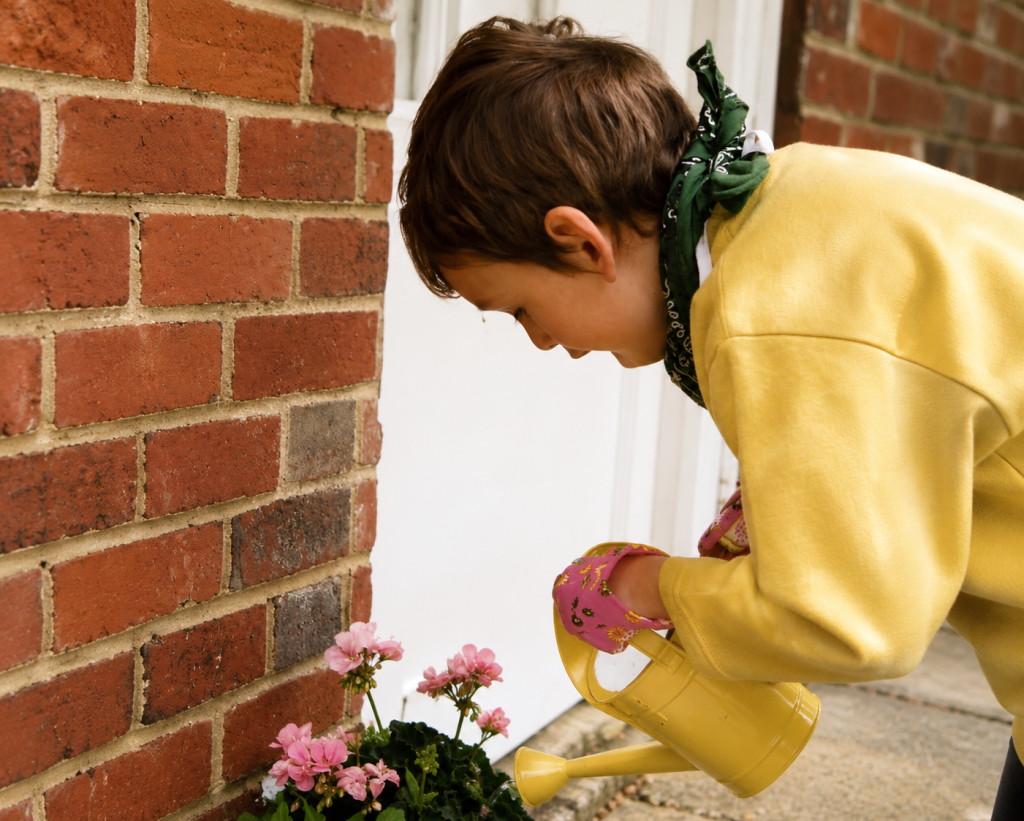
Childhood development unfolds most deeply through active participation within lived experience. Movement, exploration, experimentation, repetition, problem solving, sensory interaction, relational engagement, and meaningful involvement within ordinary life all contribute to how children gradually organise themselves physically, cognitively, emotionally, sensorily, socially, and developmentally over time.
Children do not develop only through instruction, observation, or passive exposure to information. Development emerges through active interaction with the world itself.
The nervous system develops through doing.
Participation and developmental organisation
Active participation allows children to organise attention, movement, sensory processing, emotional regulation, intention, and learning through direct lived experience.
Reaching, moving, experimenting, climbing, handling objects, solving problems, navigating environments, participating within routines, observing consequences, and engaging relationally all contribute to developmental integration across multiple interconnected levels.
These experiences are not separate from development itself. They are the developmental process unfolding through ordinary life.
Participation therefore influences:
-
- movement and motor organisation
-
- sensory integration
-
- visual-spatial development
-
- attention and cognitive endurance
-
- emotional regulation
-
- confidence and autonomy
-
- body awareness and proprioception
-
- communication and relational engagement
-
- problem solving and adaptability
-
- physiological organisation and nervous-system regulation
-
- continuity of effort and motivation
-
- exploratory confidence and curiosity
Passive experience and developmental fragmentation
Modern childhood increasingly contains forms of passive participation:
-
- prolonged screen exposure
-
- continual entertainment consumption
-
- highly externally directed activities
-
- environments that limit exploration
-
- excessive assistance replacing engagement
-
- overstimulation reducing internally organised attention
-
- objects or routines that reduce opportunities for meaningful participation
When children become passive recipients of experience rather than active participants within it, opportunities for developmental organisation and integration may gradually diminish.
This is particularly significant for children living with neurologically based conditions or developmental differences, where meaningful participation within ordinary life may require greater intentionality and environmental coherence.
Yet these children often possess far greater developmental potential, engagement, curiosity, adaptability, and capacity for participation than is commonly recognised when environments actively encourage involvement rather than passive dependence.
Challenge, coherence, and developmental growth
Development does not emerge through the absence of challenge. Rather, growth often unfolds through meaningful experiences that are manageable enough for the nervous system and body to organise around successfully over time.
When challenges are broken down into more achievable experiences within coherently arranged environments, children may have greater capacity available for:
-
- participation
-
- movement
-
- exploration
-
- regulation
-
- problem solving
-
- communication
-
- learning
-
- autonomy
-
- developmental integration
The goal is therefore not overprotection or continual accommodation, but environments that reduce unnecessary interference while still encouraging active engagement with the world.
Ordinary life as the developmental environment
Development unfolds continuously within ordinary life:
-
- meals
-
- movement
-
- conversations
-
- household routines
-
- outdoor experiences
-
- reading
-
- play
-
- relationships
-
- objects
-
- sensory environments
-
- transitions
-
- opportunities for responsibility and participation
These everyday experiences gradually shape how children organise themselves internally and engage externally with the world around them.
For this reason, thoughtfully arranged environments and ordinary objects may become important not because they replace development, but because they create greater opportunity for developmental participation to emerge naturally through lived experience itself.
Participation as a form of integration
Participation is not only behavioural involvement. It is a process through which the child gradually integrates body, attention, movement, intention, emotion, sensory experience, relationship, and environment into increasingly coherent forms of engagement with life.
When children are able to participate actively and meaningfully within ordinary life, development often becomes more integrated, embodied, relational, and sustainable over time.
The intention is therefore not simply to help children function within environments, but to create conditions in which they may increasingly engage with the world as active participants in their own development.