
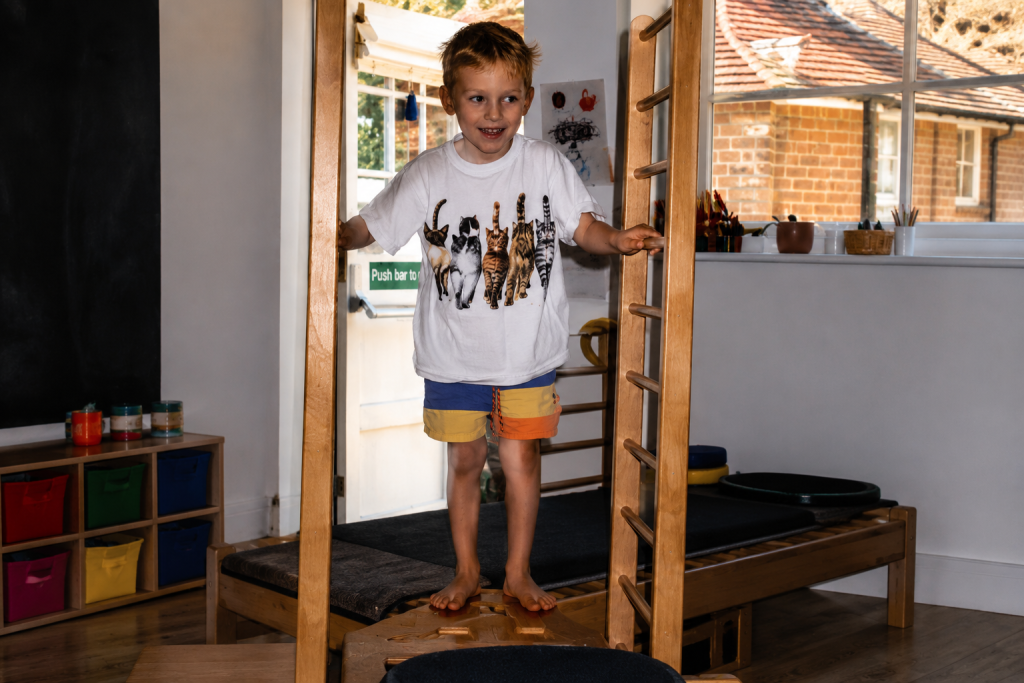
Home environments influence far more than comfort or visual appearance alone. The sensory atmosphere carried by a home — through light, sound, rhythm, texture, spatial organisation, movement, emotional tone, and the quality of everyday interactions — may gradually shape how children and adults regulate, participate, recover, relate, and organise themselves physiologically and emotionally over time.
Much of this influence often remains subtle and difficult to isolate directly, yet the nervous system continually responds to environmental conditions throughout everyday life.
Homes are not experienced only visually. They are experienced sensorily, emotionally, physically, relationally, and physiologically.
Sensory coherence and nervous-system organisation
The nervous system continually processes incoming sensory information from the environment:
-
- lighting
-
- sound
-
- movement
-
- visual complexity
-
- textures
-
- pacing
-
- spatial organisation
-
- transitions
-
- emotional atmosphere
-
- sensory predictability
When these elements become highly fragmented, overstimulating, unpredictable, or continually competing for attention, the nervous system may gradually shift toward increased vigilance, dysregulation, fatigue, irritability, fragmentation of attention, or withdrawal from participation.
In contrast, environments with greater sensory coherence may support:
-
- steadier emotional regulation
-
- continuity of attention
-
- physiological settling and recovery
-
- exploratory confidence
-
- participation within ordinary routines
-
- sensory integration
-
- emotional steadiness
-
- clearer orientation within space
-
- improved relational engagement
-
- greater capacity for rest and recovery
Sensory coherence does not require perfection, silence, or aesthetic minimalism. Rather, it involves environments where sensory experiences are organised in ways that feel more predictable, coherent, and physiologically manageable over time.
Emotional atmosphere within the home
Children experience the emotional tone of environments long before they can analyse or verbalise them intellectually.
The pace of movement within the home, the rhythm of transitions, the quality of light, the presence or absence of continual background noise, emotional tension, hurried interactions, visual clutter, or sensory overload may all contribute to how safety, regulation, participation, and relational connection are experienced within everyday life.
Emotional atmosphere is carried not only through relationships, but through environments themselves.
This atmosphere may gradually influence:
-
- emotional regulation
-
- attention and concentration
-
- physiological stress responses
-
- sleep and recovery
-
- communication and relational engagement
-
- frustration tolerance
-
- movement organisation
-
- exploratory confidence
-
- continuity of participation within ordinary life
Rhythm, predictability, and sensory regulation
The nervous system often regulates more effectively within environments containing greater rhythm and continuity.
Predictable routines, calmer transitions, sensory consistency, repeated patterns of daily life, and coherent environmental organisation may support a greater sense of orientation within both children and adults.
This does not mean rigid control or overly structured environments. Rather, rhythm provides continuity through which experiences may integrate more coherently over time.
Simple repeated experiences often matter deeply:
-
- calmer lighting in the evening
-
- quieter transitions between activities
-
- reduced background media
-
- sensory-considerate materials
-
- stable rhythms around meals and sleep
-
- opportunities for movement and outdoor experience
-
- environments with reduced unnecessary visual fragmentation
These qualities may gradually influence emotional steadiness and nervous-system organisation in subtle but cumulative ways.
The home as a developmental environment
Development unfolds continuously within ordinary environments.
The sensory and emotional atmosphere of the home may influence how children move, learn, regulate, communicate, explore, participate, recover, and organise themselves within everyday life.
For this reason, thoughtfully arranged home environments are not simply aesthetic choices. They may become part of the wider developmental and relational atmosphere through which emotional regulation, participation, learning, and integration gradually emerge over time.
The intention is not to create perfect homes or eliminate all stimulation and challenge. Rather, it is to cultivate environments with greater coherence, where attention, movement, sensory experience, emotional regulation, and participation are able to organise more naturally within everyday life.